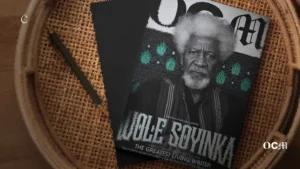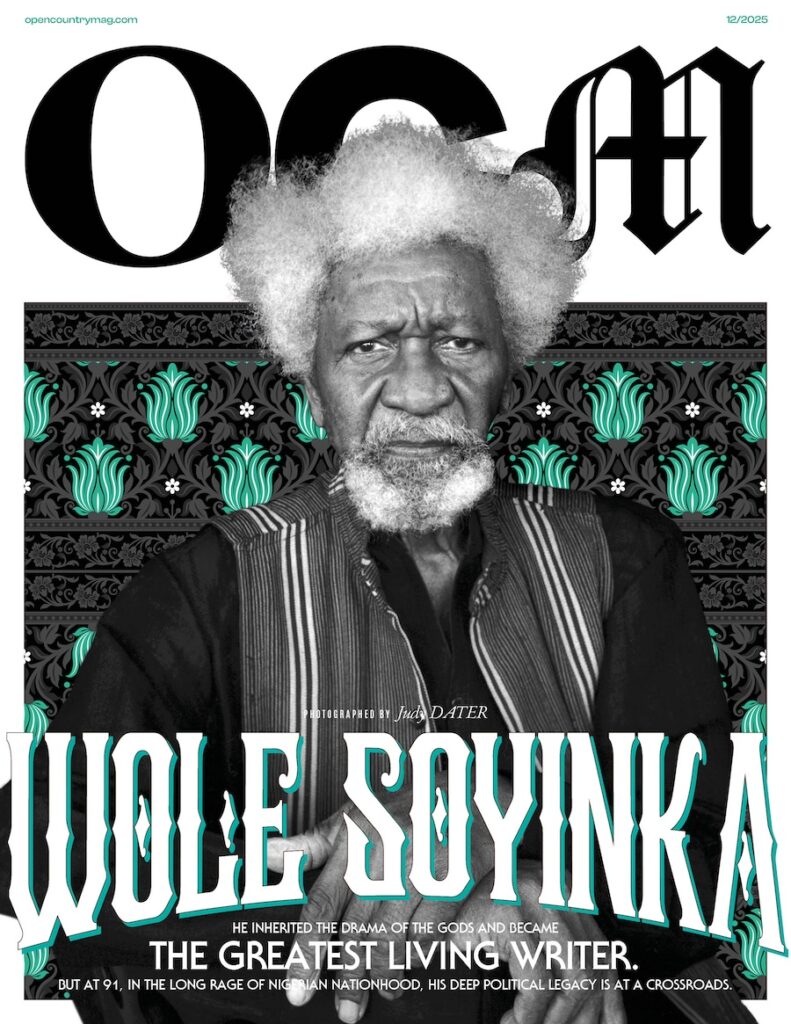
Two months ago, I stumbled upon a gratifying analysis of my Profile of Pa Wole Soyinka for Open Country Mag. The commentary appears in Words for Worlds, a publication on Substack run by Gautam Bhatia, who wrote it as well, and is dated December 15, 2025 — three days after the Profile was published. The piece is titled “Words for Worlds – Issue 110,” and here are Gautam’s words:
In this section, I talk about the books I’m reading; but over the weekend, I read an essay that was so incandescent, that I cannot but share it here: in Open Country Mag, “How Wole Soyinka Inherited the Drama of the Gods — and Shadowed the Nigerian Tragedy,” by Otosirieze. If you thought you knew a little bit about Wole Soyinka (as I thought did), a little bit about 20th-Century Nigerian literature (as I thought I did), and a little bit about the tragedy of the Biafran War (as I thought I did) – well, this essay will shatter your assumptions, and construct a world from the fragments.
The essay is not just a profile of Wole Soyinka. Rather, Otosirieze takes on that most challenging of tasks: recounting the political history of a nation reflected in, and reflecting, the artistic, intellectual, moral, political, and ethical life of its most celebrated writer. Such a task is rife with the perils of slipping into homilies or reductionism on the one hand, and getting bogged down in detail on the other. Otosirieze steers a course between these two with the surest of hands, and gives us something truly remarkable: a biography in which the national and the personal are so intertwined that they shine under each other’s light, and with a clarity so harsh that neither the beauty nor the warts can stay artfully hidden.
In this historical story, there are others who have walk-on roles, characters I have known from my reading elsewhere: the gathering at Makarere University in ‘62, which charted a future course for African literature in English (or not); Chinua Achebe, Christopher Okigbo, Ken Saro-Wiwa, and so many others – whose own lives now feel sharper, more clarified, in relation to the richness of Soyinka’s.
The story’s dominant register is tragic, and Otosirieze does not shrink from an accounting of the tragedies, both national and personal. But if art, at its best, lets us make sense of tragedy, then Otosirieze paints a portrait of the artist that does both justice to him, and to his nation. You come out of this essay a little sadder – but not hopeless. That is perhaps all we can wish for.
Man, this is the best thing I have seen written about any of my Profiles! (Right next to the incisive feature on Open Country Mag by Oritsejolomi Otomewo of Communique.)
Gautam gets the stakes.
I often stress the lack of critical engagement in African literature, and it is telling that the first significant commentary on an epochal piece on Soyinka came not from a Nigerian or an African but from an Indian writer focused on science fiction and fantasy. (That post also contains commentary on the Kenyan writer Meja Mwangi and his Going Down River Road.) It tells more than we know.
I have only just discovered Gautam’s own work and I thank him for his generosity.
I have never been a Substack person — I read pieces there from time to time — but I have just made my first subscription on that platform, to his. I look forward to discovering what else this earnest reader is doing. Please subscribe to his Substack.
Read: “Words for Worlds – Issue 110”